

It’s a rush every time. The warm lights melted the bronzed, sticky tan that lay gently on my skin. In my hand, a shiny second place medal.
Smiling ear to ear, I saw my coach just past the big blue curtain. Pride clearly written on her face. I had done well. It was my 7th bodybuilding show and I placed higher than I ever had in my 6-year bodybuilding career. But, I didn’t win. I still didn’t get a bid to nationals.
Instead of slamming cookies in the passenger seat on the way home, I just rested – my eyes closed. Feeling completely whipped from the entire weekend, I struggled with my emotions. As I did after almost every show.
I was happy, and proud, but conflicted. What am I doing and why? The following week, I began to notice weight-loss messages everywhere – more than normal. Whether you asked for them or not, you’re constantly bombarded with weight-loss ads. Lose inches, look younger, gain muscle, lose muscle, whatever you want to do, you will find support to do it. But, in my opinion, the message is missing something.
I have spent the better part of 6 years trying to lose weight and gain muscle. In 2015, I was told I needed more muscle (for the bikini division). So I spent a year and a half training (and eating) in a way where I could gain substantial (and quality) lean muscle mass. The following year, I was told I was too big.
I took what the judges have said as fact, instead of educated suggestions. What followed was a lot of negative self talk – “I’m too big. My legs are too big, my waist isn’t small enough. My shoulders aren’t in proportion with my lower half.” Looking back, I wish I had spent more time telling myself how awesome my accomplishments were. I wasted time and energy hating my flaws, instead of loving my strengths.
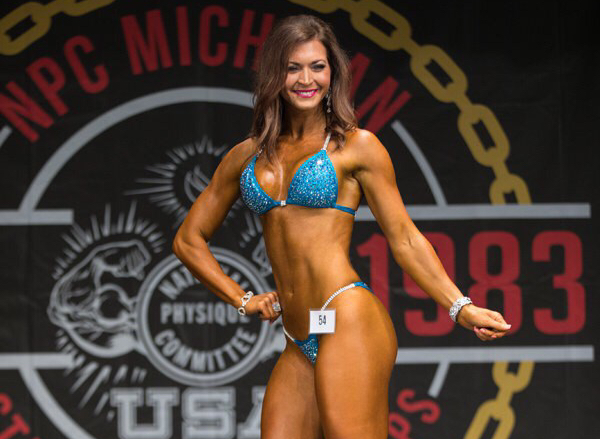
Operationally, maybe thats how I stay competitive. I never let myself be prideful or proud, because I’m never quite there. But I wonder if we just received different messages, and gave ourselves a few ‘attaboys’ that our mental space would be a lot healthier.
When we think of fitness, we always think of the physical component, but what about mental fitness? How much time do you spend making sure that your mind is as fit as you want your body to be? I can honestly say I spend very little time on my mental fitness – and it is crucial to success in every other area of life.
It’s common for competitors to refer to something we call ‘post-show blues.’ It’s a sort of depression that ensues after you walk off of the stage – after you are forced to let go of your obsession and allow yourself to have some normalcy. Most competitors have spent at least 12 weeks (give or take) only focusing on their physical self, having completely ignored their mental health. Every week we submit photos to our coaches, do our own comparison and pick ourselves apart. Do you think that behavior just stops because the show is over?
If you aren’t a competitor, the theory doesn’t change. If you are in a weightless phase, you are so often hyper aware of your waistline and you completely ignore your mind. We even focus on fighting the objections our mind gives us – hungry? Ignore it, Too tired? Push through.
Mental health and physical fitness are one in the same. It took competing for me to learn the importance of this relationship. Every day work stress, hormonal imbalances, sleep deprivation and other factors play a heavy role in weight-loss. I didn’t know that my cortisol levels were through the roof, wreaking havoc on my gut-health and ultimately stunting my weight-loss. I also get frequent headaches. Did you know that can be related to stress and hormone changes as well?


If you have decided to take steps to improving your quality of life physically. Don’t forget to monitor and track your mental health as well. While you are tracking your food, make sure that you are tracking your stress levels. While you are planning your workouts, make sure that you are tracking your quality of sleep. Your body will ultimately tell you what it needs, but you have to be willing to listen.
 Fit Little Bits